
How to Choose a Custom Home Builder in Paducah
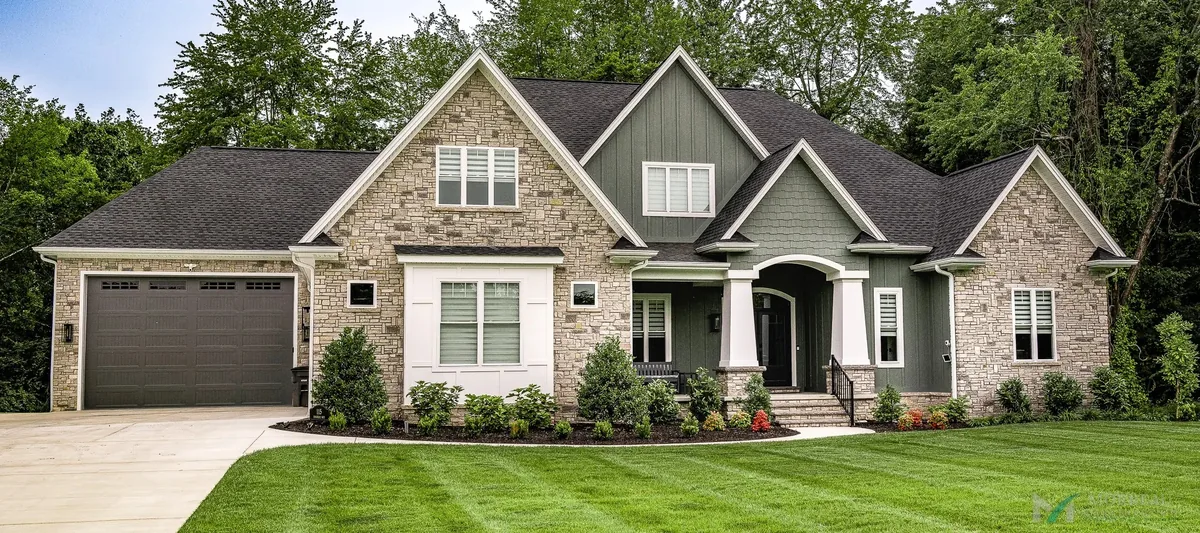
Choosing a builder is not really a decision about construction. It is a decision about who manages your money, your schedule, and several hundred choices you have never had to make before. The framing crew will be competent almost anywhere in Western Kentucky. What separates one builder from another is what happens before the framing crew shows up, and what happens when something on the job does not go according to plan.
Here is how to evaluate a custom home builder in Paducah without relying on gut feel.
Start With How the Builder Gets Paid
This is the first question, not the last one. The payment structure tells you where the builder's incentives point.
Under a fixed-price contract, the builder names one number. Anything the builder saves after that becomes profit. That is not automatically dishonest, but it does mean the builder benefits from spending less on your house than they told you they would.
Under a cost-plus contract, you pay documented project costs plus an agreed management fee. Invoices are open. Savings on a line item stay with you. The fee is a stated percentage, shown as its own line, so you can see exactly what the builder earns. If you want the full comparison, we wrote about cost-plus versus fixed-price contracts separately.
Either model can be run well or run badly. What matters is that the builder can explain theirs clearly, in plain language, without getting defensive.
Questions Worth Asking
About the budget
- Can I see a sample preconstruction budget from a real project, with the client details removed?
- How many line items does it have? A budget that fits on one page is a guess.
- Where did the numbers come from — actual subcontractor input, or a per-square-foot rule of thumb?
- Which items are allowances, and how were those allowance amounts set?
- What is specifically excluded? Driveway, landscaping, site work, utility taps, and window treatments are the usual gaps.
About the schedule
- Who builds and maintains the schedule, and can I see it?
- When do you need my selections made, and what happens if I am late?
- Which long-lead items do you order early, and when do those get locked?
- How many projects will you be running while mine is active?
About communication
- Who is my single point of contact? Is that person also the one making decisions on site?
- How often will I get a written update, and what is in it?
- How do I see current cost against budget while the job is running?
- When something unexpected shows up, how quickly do I hear about it, and in what form?
About the trades
- Are your subcontractors people you use repeatedly, or whoever is available?
- Do you pay your trades on time? Ask the subs, not the builder.
- Who supervises the site on a normal working day?
Why Three Bids Almost Never Compare
Homeowners are told to get three bids. It is reasonable advice that usually produces unusable results, because the three numbers are rarely describing the same house.
Bids diverge for structural reasons:
- Different allowances. One builder budgets a modest tile package. Another budgets the tile you actually picked out. Same plan, very different total.
- Different exclusions. Site work, retaining walls, well or septic, utility connections, and final grading get carved out of one bid and included in another.
- Different plan completeness. If the drawings do not specify a detail, each builder assumes something. Those assumptions never match.
- Different fee treatment. Some builders bury overhead inside line items. Some show it separately. Some do both, in different places.
To make bids comparable, give every builder the same plan set and the same written specification list — brands and models where you know them, allowance targets where you do not. Then require line-item pricing in the same categories. If a builder will not provide that, you have learned something useful.
The low bid is often just the bid with the most missing from it. That gap does not disappear. It reappears later as a change order, when you have no leverage and no alternative.
Red Flags
- A price given at the kitchen table. Nobody can price a custom home in an hour. A number that fast is a sales tool.
- Vague allowances. "We'll figure out the finishes later" means the budget you approved is not the budget you will pay.
- Pressure to sign before the plans are finished. The contract should follow the scope, not lead it.
- Large deposits with no defined milestone. Payments should attach to completed work, not to the calendar.
- No written change order process. If changes are handled verbally, the disagreement is coming.
- No verifiable insurance. Ask for a certificate sent directly from the agent.
- Reluctance to give references from finished projects. Ask specifically for a client whose job ran into a problem, and ask that client how the builder handled it.
What Local Actually Buys You
A builder who works consistently in McCracken County and the surrounding counties knows which inspectors want what, which soils show up where, how long the utility providers take, and which trades will still answer the phone in the middle of a busy season. That knowledge does not show up as a line item, but it shows up in how few surprises land on your project.
It also means the builder has something to protect. In a market this size, reputation compounds. So does the other kind.
Before You Sign Anything
Read the contract with the same attention you gave the floor plan. Confirm the scope document, the allowance schedule, the payment schedule, and the change order process are all attached and all consistent with each other. Then confirm you understand who decides what, and who you call when you disagree.
If you want a rough order of magnitude before you talk to anyone, run the numbers through our custom home cost estimator. If you want a real budget built from your plan, your lot, and your finish level, that comes out of structured preconstruction, not an estimator. For background on what drives cost in this region, see our guide to the cost to build a house in Kentucky.
How We Work
At Morreau Construction, you work directly with Ryan Morreau from the first conversation to the final walkthrough. Preconstruction is a defined step with a defined output: a line-item budget built from real trade pricing, a written scope, and a schedule you can hold us to. Contracts are cost-plus, and the cost side is open to you throughout. You can see how the whole sequence runs on our process page, or look at completed work on our custom home building page.
Interview us the same way you interview everyone else. Ask the hard questions. The answers should be specific.
Morreau Construction · (270) 816-4959 · ryan@morreauconstruction.com